
Tractor-trailers are essential to Atlanta’s economy, moving freight to and from distribution hubs, warehouses, rail yards, and retail centers across the region. Yet when these massive vehicles enter dense urban traffic, their blind spots become a significant threat to surrounding drivers. Limited visibility, narrow lanes, and constant lane merging create an environment where even a routine maneuver can result in devastating harm.
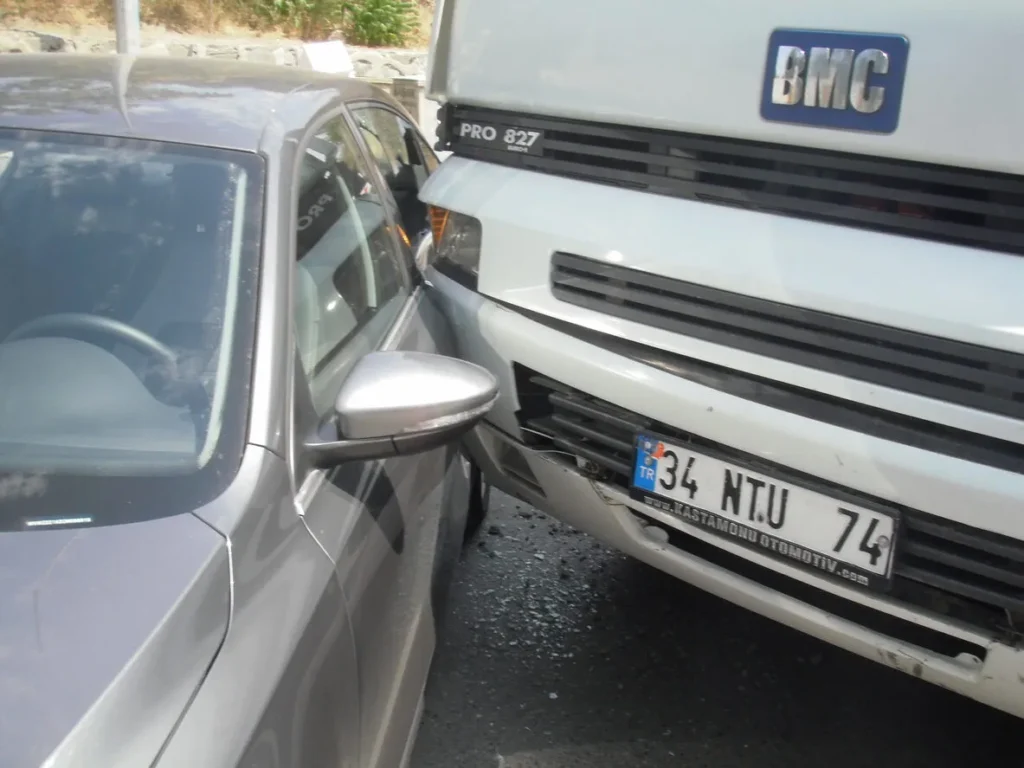
Understanding how blind-spot collisions occur and why they are so common in cities like Atlanta is critical for anyone injured in these high-pressure roadway environments.
Why Blind Spots Are Especially Dangerous on Atlanta Streets
Tractor-trailers have large no-zone areas surrounding all sides of the vehicle. These blind spots are far bigger than many drivers realize, especially on the right side of the truck and directly behind the trailer.
In dense urban settings, these areas become even more hazardous due to:
- Constant merging and weaving through busy lanes.
- Reduced shoulder space that forces vehicles closer together.
- Frequent use of truck routes that run through neighborhoods and commercial districts.
- Traffic congestion prevents drivers from maintaining a safe distance.
Drivers on the Downtown Connector, Buford Highway, Moreland Avenue, Fulton Industrial Boulevard, or routes feeding into I-285 regularly encounter tractor-trailers navigating narrow spaces with limited visibility.
Common Scenarios Where Blind-Spot Collisions Occur
Blind-spot collisions typically occur when a truck driver cannot see a smaller vehicle in an adjacent lane. In cities like Atlanta, several scenarios increase the likelihood of these events.
Including:
- Lane-change events. Tractor-trailers often need multiple lanes to prepare for turns or to merge into designated truck routes, and smaller vehicles traveling beside the trailer can disappear from the driver’s view.
- Right-hand turns. Trucks making wide right turns may swing left before cutting back, placing nearby drivers in danger zones without realizing it.
- Stop-and-go congestion. Vehicles move unpredictably around trucks in heavy traffic, often drifting into blind spots without the truck driver’s awareness.
- Passenger cars riding too closely. Tailgating or attempting to pass too quickly can put smaller vehicles directly into the truck’s rear no-zone.
When these situations occur at high speeds or in heavy traffic, the force of the impact can cause significant structural damage and serious injuries.
How Commercial Driver Errors Contribute to Blind-Spot Harm
While blind spots are inherent to tractor-trailers, truck drivers still have a legal responsibility to operate safely.
Blind-spot collisions frequently occur when truck drivers:
- Change lanes without verifying all no-zones.
- Rely solely on mirrors instead of physically checking surroundings when possible.
- Drive too fast for traffic conditions.
- Fail to maintain appropriate spacing in urban corridors.
- Become distracted by digital logs, navigation devices, or phone use.
Even minor miscalculations can generate powerful lateral forces that directly affect the spine, head, and internal organs of occupants in smaller passenger vehicles.
Why Urban Freight Growth Is Increasing Blind-Spot Collisions in Atlanta
Atlanta’s role as a southeastern logistics hub continues to expand. More freight means more tractor-trailers on surface streets that were never designed to handle high volumes of commercial traffic.
As shipping demands rise, trucks are increasingly routed through:
- Residential neighborhoods near warehouse clusters.
- Narrow commercial corridors with dense vehicle and pedestrian activity.
- Urban connector routes where merging is constant.
This shifting traffic pattern places more trucks in proximity to everyday drivers, increasing the risk of severe blind-spot events.
Establishing Liability in Blind-Spot Collisions
Blind-spot collisions often involve complex questions about driver conduct, safety compliance, and company policies.
A thorough investigation may require:
- Reviewing dash-cam footage and any available surveillance video.
- Obtaining electronic logging device (ELD) and black-box data.
- Analyzing the truck driver’s training, rest schedule, and safety history.
- Assessing whether mirrors, sensors, or side-view cameras were maintained correctly.
- Reconstructing the lane-change or turning sequence.
Trucking companies and their insurers often seek to avoid liability, making prompt legal intervention essential.
Speak With Our Atlanta Truck Injury Attorneys About Your Options
If you or a loved one was harmed in a blind-spot collision involving a tractor-trailer, you have the right to answers and accountability. Ashby Thelen Lowry can investigate what happened, identify every responsible party, and pursue the financial recovery you need for medical care, lost income, and long-term support.
Call (404) 777-7771 or contact us online to schedule a free consultation and learn how our team can help you move forward.