
In Need of an Experienced Motorcycle Accident Attorney in Savannah?
Savannah presents a completely different riding environment from inland Georgia cities. As a historic coastal port with heavy tourism, industrial shipping activity, and a dense downtown grid, traffic patterns are shaped by a constant mix of visitors, commercial vehicles, and local commuters.
For motorcyclists, that mix creates unpredictable conditions. Riders may move from open stretches like Interstate 95 or Interstate 16 into tightly packed downtown streets, cobblestone corridors, or congested routes leading toward the waterfront and barrier islands. When drivers unfamiliar with these transitions fail to adjust, serious collisions can occur.
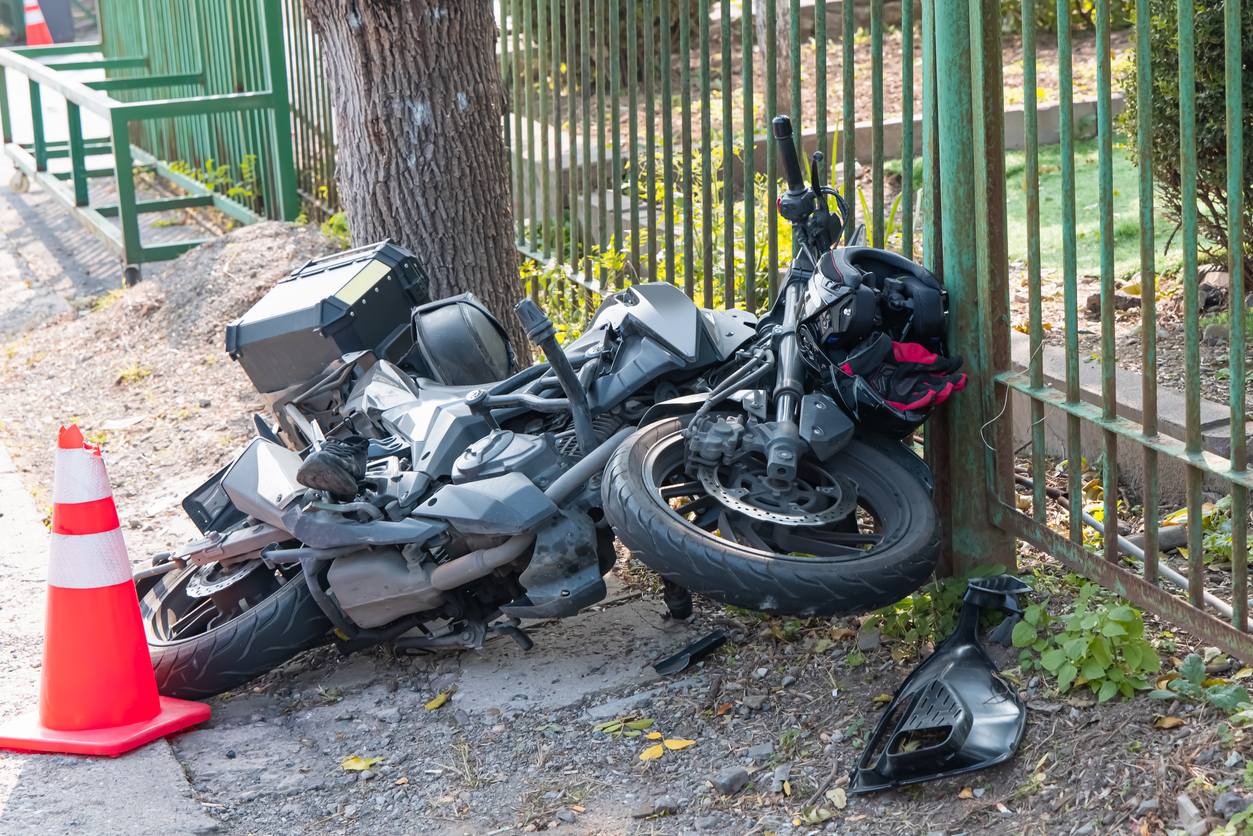
Why Motorcycle Collisions in Savannah Often Involve Unpredictable Traffic Behavior
Savannah’s roadway system is heavily influenced by tourism and port activity. Millions of visitors travel through the city each year, many of whom are unfamiliar with the layout of the historic district, one-way streets, and frequent intersections.
At the same time, the Port of Savannah drives significant commercial traffic, including trucks moving through major corridors like I-16, I-516, and U.S. Route 17.
This combination creates conditions where:
- Drivers hesitate or make last-second turns in unfamiliar areas.
- Commercial vehicles move through urban streets not designed for heavy traffic.
- Traffic patterns shift quickly between open highways and dense downtown grids.
For motorcyclists, these sudden changes in driver behavior often reduce visibility and reaction time.
What Makes Motorcycle Cases Different in Savannah
Motorcycle cases in Savannah often involve a blend of local and non-local drivers. That distinction matters because many collisions are caused by hesitation, confusion, or navigation errors rather than by purely aggressive driving.
Unlike more predictable commuter cities, Savannah introduces additional variables:
- Tourists navigating historic streets and unfamiliar intersections.
- Drivers distracted by landmarks, navigation systems, or pedestrian-heavy areas.
- Traffic is influenced by seasonal events, festivals, and waterfront activity.
In areas like the Historic Landmark District or along Victory Drive, drivers may be divided in attention among multiple competing factors. That divided focus frequently plays a central role in collisions.
Common Causes of Motorcycle Collisions in Savannah
In Savannah, collisions often stem from how drivers respond to unfamiliar or complex traffic environments. The city’s layout and visitor volume create recurring behavioral patterns that put riders at risk.
These patterns often include:
- Drivers are making sudden turns or stops within the Historic District due to navigation confusion.
- Vehicles traveling along U.S. Route 80 toward Tybee Island are misjudging traffic flow.
- Commercial trucks are moving through port corridors and failing to account for nearby motorcycles.
- Drivers entering intersections along Abercorn Street or Victory Drive are not fully clearing traffic.
- Vehicles are slowing unexpectedly near waterfront areas or tourist destinations.
These situations tend to develop quickly and often leave riders with limited options to avoid impact.
Where Motorcycle Collisions Commonly Occur in Savannah
Savannah’s collision patterns are closely tied to how traffic moves between highways, downtown areas, and coastal routes. Certain areas consistently present a higher risk due to congestion, unfamiliar drivers, and roadway design.
High-risk areas include:
- Interstate 16 as it approaches downtown, where traffic compresses, and exits increase.
- Interstate 95 corridors near Savannah/Hilton Head International Airport.
- Abercorn Street and Victory Drive, which carry heavy local and regional traffic.
- The Historic District is where narrow streets, one-way traffic, and pedestrian activity intersect.
- S. Route 80 and the Islands Expressway, where drivers travel toward coastal destinations.
Understanding how traffic behaves in these areas is often key to determining how a collision occurred.
Injuries Riders Face After a Motorcycle Collision in Savannah
In Savannah, collisions often involve sudden stops, turning vehicles, or interactions with larger commercial traffic. These dynamics can result in riders being thrown, struck laterally, or forced into the roadway.
The resulting injuries often reflect those impact conditions:
- Injuries caused by abrupt stops or turning vehicle impacts in dense traffic areas.
- Trauma involving the lower body when riders are struck during intersection conflicts.
- Head and upper body injuries resulting from secondary contact with the ground.
- Internal injuries that may not be immediately detected following the collision.
- Long-term complications related to mobility, pain, or physical function.
Because many collisions occur in urban environments, emergency response may be immediate, but recovery is often prolonged.
How Liability Is Proven in Savannah Motorcycle Cases
In Savannah, proving fault often requires understanding how unfamiliarity with the roadway influenced driver behavior. Many collisions occur when a driver is navigating the city while reacting to traffic, pedestrians, and surrounding conditions.
That combination creates critical moments of inattention.
For example, a driver traveling through the Historic District may focus on locating a destination, adjusting to one-way streets, or responding to pedestrian activity. In that moment, a motorcycle traveling lawfully through the same space can be overlooked. In other cases, a driver heading toward Tybee Island may become focused on traffic flow or route changes, failing to track nearby vehicles properly.
Our attorneys focus on reconstructing those decision points.
We examine what the driver was processing at the time, how traffic conditions were evolving, and whether the motorcycle was visible under those circumstances. In a city like Savannah, where roadway behavior is heavily influenced by tourism and navigation challenges, liability often depends on showing how a driver’s attention shifted and why that shift led to the collision.
How Our Attorneys Help Riders in Savannah
Motorcycle cases in Savannah require a detailed understanding of how tourism, commercial activity, and local traffic intersect. These cases are often shaped by conditions that are unique to coastal cities and historic environments.
Our attorneys approach these cases by focusing on context.
We work to:
- Identify how traffic patterns influenced by tourism or port activity contributed to the collision.
- Analyze driver behavior in unfamiliar or high-density environments.
- Preserve evidence from intersections, businesses, and surrounding areas.
- Build a case that reflects how quickly these collisions develop and why the rider could not avoid the impact.
Every case is prepared with the expectation that it must be clearly proven through evidence and analysis.
Speak With Our Georgia Motorcycle Crash Lawyers Today
If you were injured in a motorcycle collision in Savannah, acting quickly is critical. Evidence may be time-sensitive, particularly in high-traffic or tourist-heavy areas.
Contact our Savannah Personal Injury Attorney at Ashby Thelen Lowry today at (404) 777-7771 or contact us online for a free consultation.
“Drew was associated in the representation of a client that was severely burned while working at a South Georgia industrial plant. Drew’s unstoppable work ethic and persistent discovery of facts took the value of the client’s case to an entirely new level. As a result of Drew’s diligence, we were able to obtain a jury verdict over $13,000,000. This would have never occurred without Drew’s involvement.”