
Motorcycle collisions in multi-lane traffic are among the most disputed and difficult cases to resolve in Georgia. Unlike single-lane or intersection events, these collisions often unfold in seconds, without clear points of impact or obvious fault. Drivers change lanes, merge, accelerate, or brake while surrounded by other vehicles, and when something goes wrong, the question is not just what happened, but how it happened.
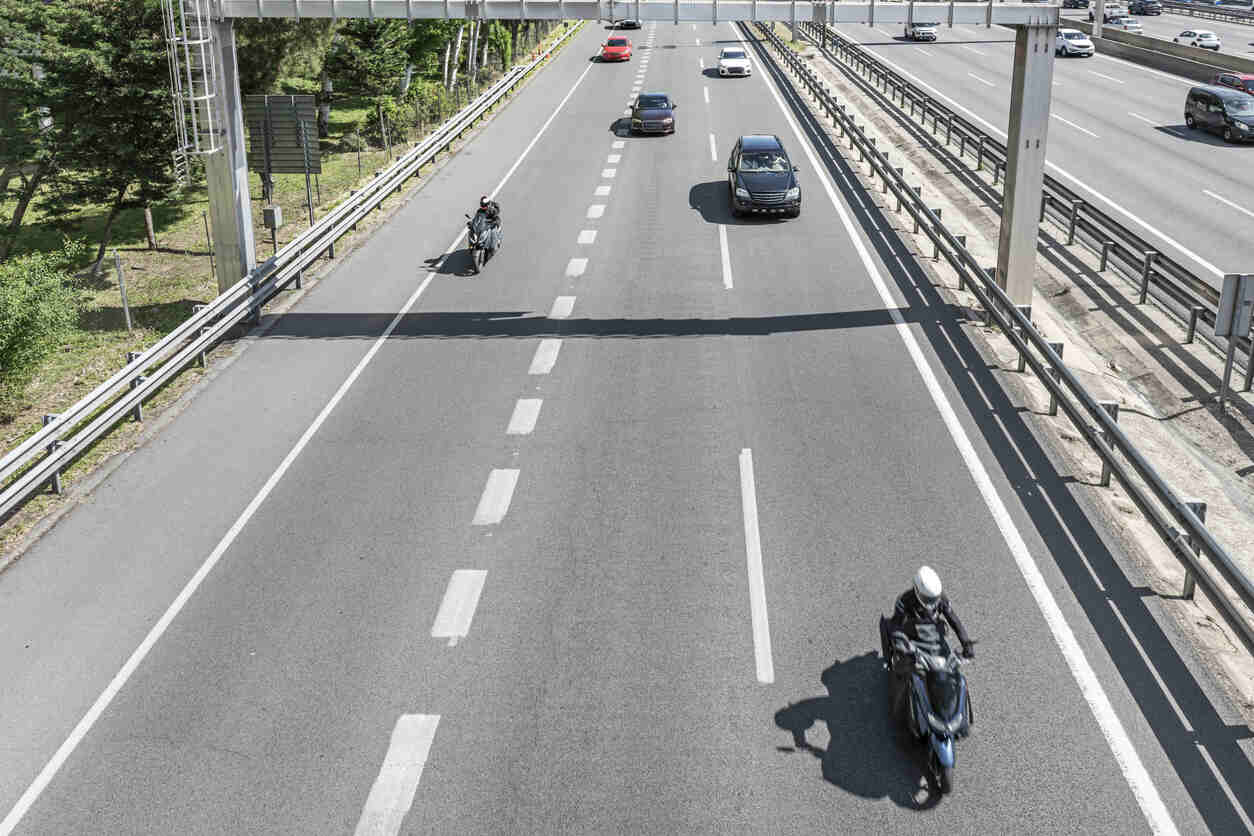
For injured riders, that distinction matters. Proving liability in these cases requires more than showing that a collision occurred. It requires reconstructing movement, timing, and decision-making in a way that makes the sequence clear.
Why Multi-Lane Motorcycle Collisions Are So Common in Georgia
Georgia’s major roadways are built around multi-lane traffic flow. High-volume corridors like I-285, I-75, I-85, and GA-400 carry constant commuter and commercial traffic, often moving at high speeds and changing patterns throughout the day.
In these environments:
- Drivers frequently shift lanes to maintain speed or reach exits.
- Traffic density forces vehicles into proximity.
- Sudden slowdowns create chain-reaction conditions.
Motorcycles, by contrast, rely on space, visibility, and predictability. When drivers fail to account for a rider’s position during a lane change or merge, the result is often a sideswipe or forced displacement, leading to a serious collision.
Why Fault Is Harder to Establish in Lane-Change and Merging Cases
In many motorcycle cases, there is a clear triggering event, such as a failure to yield at an intersection. Multi-lane collisions are different. They often involve two moving vehicles, each with a different version of what occurred.
Common disputes include:
- A driver claiming the motorcycle was in their blind spot.
- A driver asserting the rider was moving between lanes or traveling too quickly.
- Conflicting accounts about which vehicle initiated the lane change.
Without clear, objective evidence, these cases can quickly turn into credibility contests. Insurance companies often exploit that uncertainty by shifting blame to the rider or arguing that fault is shared.
The Role of Blind Spots, Visibility, and Driver Awareness
One of the most frequent defenses in these cases is that the driver did not see the motorcycle. While visibility is a factor, it is not a complete defense.
Drivers have a responsibility to:
- Check mirrors and blind spots before changing lanes.
- Ensure the lane is clear before merging.
- Account for smaller vehicles that may be less visible but still present.
In multi-lane traffic, motorcycles are often fully visible for several seconds before a collision. The issue is not always whether the rider could be seen, but whether the driver took the time to look and process what was in the lane.
How These Collisions Are Reconstructed
Because multi-lane motorcycle collisions rarely produce straightforward evidence, building the case requires a detailed reconstruction of events. The goal is to show how both vehicles were moving and where they were positioned in the moments leading up to the collision.
That process may involve:
- Analyzing vehicle damage to determine angles and points of contact.
- Reviewing traffic or dash camera footage, when available.
- Identifying witnesses who observed lane positioning or movement.
- Evaluating roadway conditions and traffic patterns at the time.
Even small details, such as the direction of impact or the location of debris, can help establish which vehicle moved into the other’s path.
Why Insurance Companies Push Shared Fault in These Cases
Georgia follows a modified comparative fault system, which means an injured person’s recovery can be reduced if they are found partially responsible. If a rider is determined to be 50% or more at fault, recovery may be barred entirely.
In multi-lane cases, insurers often argue:
- The rider was speeding or moving unpredictably.
- The rider remained in a blind spot.
- Both parties contributed to the collision.
These arguments are not always supported by evidence, but they are effective when the facts are unclear. That is why early investigation and evidence preservation are so important.
Why These Cases Require a More Strategic Approach
Motorcycle collisions involving lane changes and merging are not simple liability cases. They require a deeper analysis of movement, timing, and driver decision-making.
Establishing fault often depends on showing:
- Which vehicle initiated the unsafe movement?
- Whether the driver had a reasonable opportunity to see the rider.
- How traffic conditions influenced the sequence of events.
Without that level of detail, the case may default to conflicting narratives rather than clear conclusions.
Speak With Our Georgia Motorcycle Crash Lawyers Today
If you were injured in a motorcycle collision involving lane changes or merging traffic in Georgia, it is important to act quickly. These cases often depend on evidence that can disappear or become harder to obtain over time.
Contact our Georgia motorcycle crash lawyers at Ashby Thelen Lowry today at (404) 777-7771 or contact us online for a free consultation.
Related Blogs –
- Why Motorcycle Riders Face Increased Risk on Atlanta’s Multi-Level Interchanges
- Intersection Blind Spots and Driver Negligence in Motorcycle Collisions
- What Happens If a Passenger Is Injured in a Motorcycle Crash in Georgia?
- Common Causes of Motorcycle Crashes on Atlanta Highways and How to Prove Fault